
Northumberland County Real Estate Market Pulse: June 2026
Northumberland County Real Estate Market Pulse: June 2026
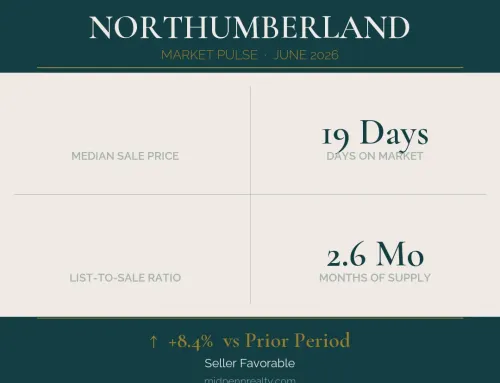
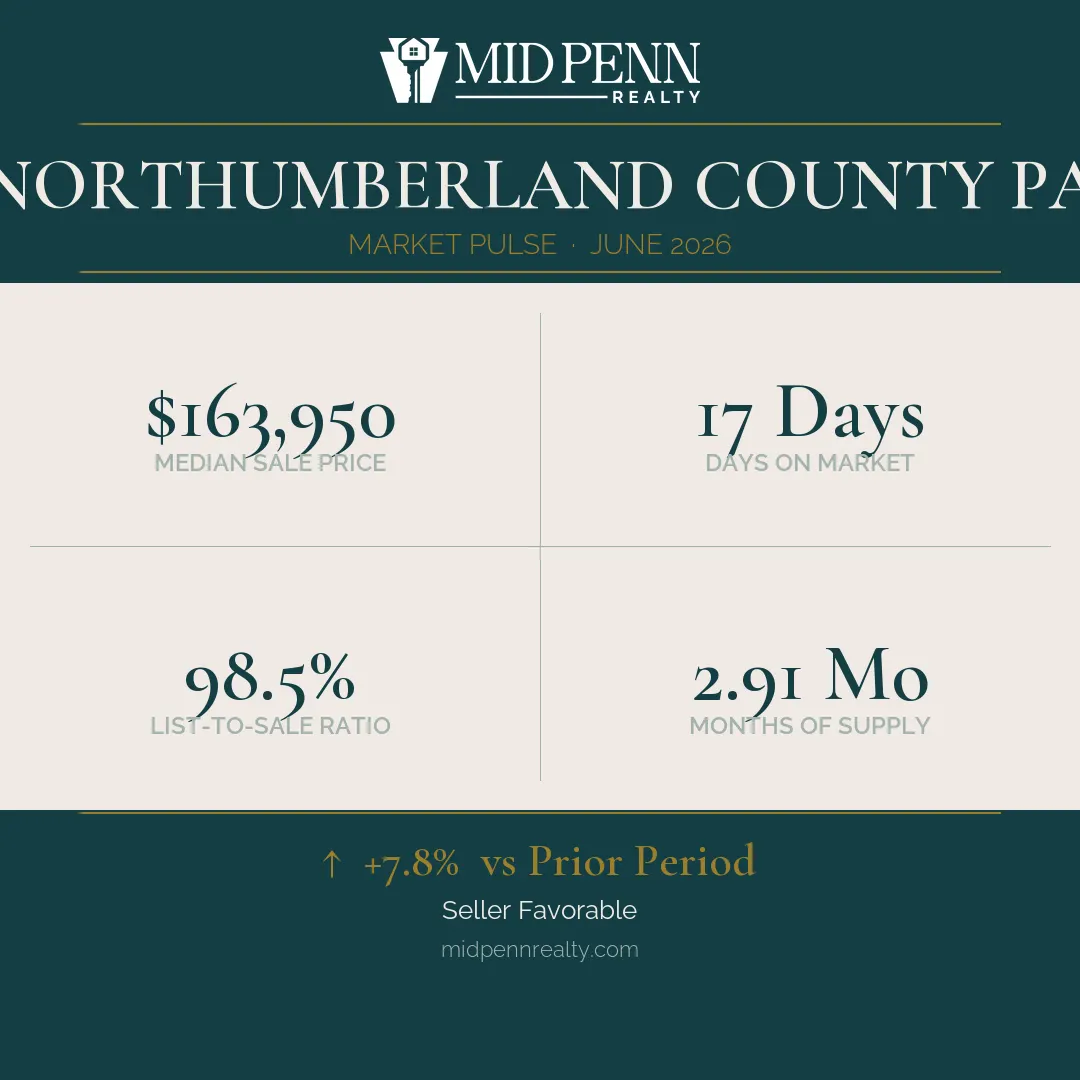
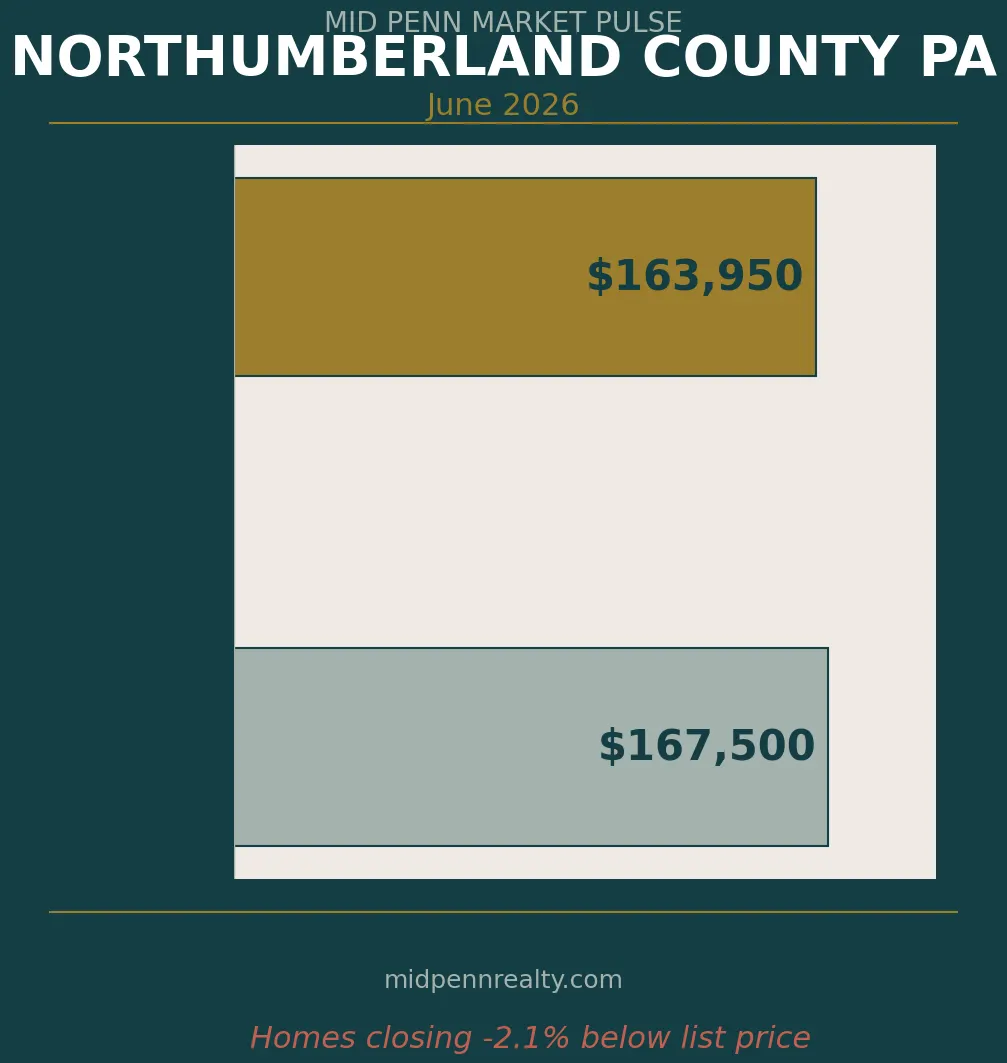
Sellers in Northumberland County are entering spring 2026 with more pricing confidence than they have had in some time. The median sale price reached $163,950 in April, representing a 7.8 percent increase compared to the prior reporting period. That kind of movement is not typical for a mid-sized Central Pennsylvania county still regarded by many buyers as an affordable alternative to larger metro markets. When prices move nearly 8 percent in a single comparison period, something more than seasonal demand is driving the shift.
The question worth asking is not simply what prices did. The question is why they moved, and what that tells buyers and sellers heading into the remainder of 2026.
The short answer is that Northumberland County is experiencing a relatively tight supply environment at a moment when buyer interest appears to be holding firm. That combination is the primary engine behind the pricing gains reported this period, and it is shaping the experience of everyone currently active in this market.
With 154 active listings across the county and a months of supply reading of 2.91, available inventory sits well below what most real estate practitioners would consider a balanced market. A balanced market typically carries somewhere between five and six months of supply. At 2.91 months, Northumberland County has roughly half that cushion. Buyers working through communities like Sunbury, Shamokin, Milton, and Mount Carmel are not seeing a depth of choices that would allow them to take their time or press sellers on price. The inventory simply is not there to support that dynamic.
The days on market figure reinforces this picture. Homes that went to settlement in April were under contract in a median of 17 days. That is a brisk pace. Properties in many of the smaller boroughs and rural townships throughout the county are not sitting idle through extended marketing periods. When a reasonably priced home comes to market in good condition, buyers are moving on it quickly. Seventeen days is the kind of number that tells you competition is real, even if it is not always visible until you are the one submitting an offer.
The list-to-sale ratio of 98.5 percent adds another layer of clarity. Sellers are not leaving much on the table. When a buyer and seller agree to a price, that price is landing just barely below the original asking price on average. For buyers accustomed to negotiating 3, 4, or 5 percent off list price, this market is a recalibration. For sellers, it means that careful pricing still works. You do not need to overshoot your list price to generate strong results, but leaving significant room for negotiation is probably not the strategy the data supports right now.
The gap between the median list price of $167,500 and the median sale price of $163,950 is relatively narrow, which reflects an alignment between what sellers expect and what buyers are willing to pay. That alignment is itself a market signal. When list prices and sale prices run far apart, it usually indicates that either sellers are overreaching or buyers are pushing back hard. Neither appears to be happening in meaningful numbers here. The market has found a working equilibrium, and it is leaning in the seller’s favor.
Because detailed historical comparison data for this specific county and reporting period is not available in this analysis, direct year-over-year comparisons carry some limitation. However, the current metrics themselves tell a coherent story. A 7.8 percent price increase, a sub-3 month supply, and a 17-day median absorption pace are not characteristics of a slow or softening market. They are characteristics of a market where demand is outpacing supply, and where sellers hold a measurable negotiating advantage.
For context, the kinds of inventory levels that typically produce this kind of price movement tend to develop when new listings are not keeping pace with closed sales over an extended stretch. Northumberland County is a geographically diverse area with a mix of older housing stock in river boroughs along the Susquehanna, more recent suburban development in areas closer to Route 11 and Interstate 80 corridors, and rural properties spread across the northern and western portions of the county. When inventory shrinks across that kind of varied landscape, it does not thin out evenly. Buyers searching in specific price ranges or specific communities often find their options narrowing faster than the county-wide headline suggests.
That is a piece of context that the raw statistics alone do not convey.
For buyers, the practical implication is that patience is a more expensive strategy in this market than it might appear. A buyer who has been watching a particular community or price range and waiting for the right property to appear needs to be prepared to act decisively when it does. Seventeen days is not a long window. Getting pre-approved, knowing your parameters, and having a clear sense of what you want before you start actively searching puts you in a much better position than trying to figure those things out after a property catches your eye.
Buyers should also come in with realistic expectations around negotiating. A list-to-sale ratio of 98.5 percent means the average buyer is getting about 1.5 percent off asking price. That is not nothing on a $165,000 home, but it is not the kind of discount that suggests sellers are under pressure. If a property is priced accurately and shows well, the expectation should be a price close to asking, not significantly below it.
For sellers, the current data presents a relatively favorable window. Prices are rising, inventory competition is limited, and buyers are moving quickly. That said, execution still matters. Homes that are priced correctly and presented well are the ones generating 17-day timelines and 98.5 percent list-to-sale ratios. Homes that are overpriced or poorly prepared still sit longer and create negotiating leverage for buyers. The favorable market condition creates the opportunity. Good preparation is what captures it.
Sellers should also think carefully about strategy in communities where new listings are scarce. In some pockets of Northumberland County, particularly in the more affordable sub-$150,000 range where first-time buyers are concentrated, demand appears to be running well ahead of supply. Pricing at or just below the top of that range can generate multiple conversations quickly, which tends to produce better outcomes than launching at an aggressive figure and reducing later.
The broader story emerging from the June 2026 data for Northumberland County is one of underlying market resilience. Despite the ongoing affordability pressures that come with elevated mortgage rates nationally, local buyers appear to be absorbing the cost of financing and continuing to transact. The county benefits from relatively modest price points compared to the regional average, which gives it some natural insulation against rate-driven slowdowns. At a median sale price of $163,950, Northumberland County homes remain accessible to a wider pool of buyers than you would find in markets to the east or in the Harrisburg corridor. That accessibility is part of what sustains demand even when broader conditions are less favorable.
The county’s employment base, anchored in part by healthcare systems, educational institutions, manufacturing, and service sectors distributed across Sunbury, Shamokin, and surrounding communities, also contributes to the steady pattern of local household formation that drives housing demand. These are not seasonal or speculative buyers. They are people rooting themselves in the region, and that kind of demand tends to be durable.
The most important single insight from this month’s data may be this: in a county where median prices are still within reach for a broad segment of working households, tight inventory tends to have an outsized effect on prices. There are simply fewer comparable options for buyers to reference, fewer properties to fall back on if a deal does not come together, and less reason for sellers to compete aggressively on price. That dynamic can persist well beyond what purely national market narratives would suggest, particularly in smaller regional markets like this one.
Northumberland County in June 2026 is a market where sellers hold a clear but not overwhelming advantage, where buyers need to be prepared and realistic, and where prices are moving in a direction that rewards action over hesitation.
If you want the full Mid Penn Market Pulse report for Northumberland County, including a deeper look at active listings, price trends by segment, and additional market context, you can request your copy and sign up for ongoing updates through the Mid Penn Realty market report portal.